
 Tweet
 Share
We delivered another strong year advancing human-relevant non-animal toxicity testing approaches. The Organisation for Economic Co-operation and Development (OECD) published our co-authored document on using a weight of evidence approach to protect against chronic toxicity and carcinogenicity. We also published on topics ranging from animal-free antibodies to in vitro methods to assess respiratory toxicity, presented at numerous conferences, and gained new leadership positions with scientific organisations. Through travel grants and equipment donations, we continued supporting the growing scientific community seeking training in and access to non-animal testing approaches.
Find these and other key highlights of 2024 below.
Publications
We published eight papers:
- Sharma M, Huber E, Arnesdotter E, Behrsing HP, Bettmann A, Brandwein D, Constant S, Date R, Deshpande A, Fabian E, Gupta A, Gutierrez R, Gutleb AC, Hargrove MM, Hollings M, Hutter V, Jarabek A, Kaluzhny Y, Landsiedel R, Milchak L, Moyer RA, Murray JR, Page K, Patel M, Pearson S, Petersen EJ, Reinke E, Roldan N, Roper C, Scaglione JB, Settivari RS, Stucki AO, Verstraelen S, Wallace JL, McCullough S, Clippinger AJ. Minimum information for reporting on the TEER (trans-epithelial/endothelial electrical resistance) assay (MIRTA). Arch Toxicol (2024).
- Haber LT, Bradley MA, Buerger AN, Behrsing H, Burla S, Clapp PW, Dotson S, Fisher C, Genco KR, Kruszewski FH, McCullough SD, Page KE, Patel V, Pechacek N, Roper C, Sharma M, Jarabek AM. New approach methodologies (NAMs) for the in vitro assessment of cleaning products for respiratory irritation: workshop report. Front Toxicol. 2024;6:1431790.
- Groff K, Allen D, Casey W, Clippinger AJ. Progress and remaining opportunities to increase the use of animal-free antibodies in the USA. Altern Lab Anim. 2024;52(5):285-289.
- Ruschig M, Nerlich J, Becker M, Meier D, Polten S, Cervantes-Luevano K, Kuhn P, Licea-Navarro AF, Hallermann S, Dübel S, Schubert M, Brown J, Hust M. Human antibodies neutralizing the alpha-latrotoxin of the European black widow. Front. Immunol. 2024;15:1407398.
- Rahman SZ, Anam A, Pandey A, Bisht R, Akbarsha MA. Meeting report: Indian Society for Alternatives to Animal Experiments: sixth annual meeting and international conference. ALTEX. 2024;41(2):324-328.
- Goetz A, Ryan N, Sauve-Ciencewicki A, Lord CC, Hilton GM, Wolf DC. Assessing human carcinogenicity risk of agrochemicals without the rodent cancer bioassay. Front Toxicol. 2024;6:1394361.
- Stucki AO, Sauer UG, Allen DG, Kleinstreuer NC, Perron MM, Yozzo KL, Lowit AB, Clippinger AJ. Differences in the anatomy and physiology of the human and rat respiratory tracts and impact on toxicological assessments. Regul Toxicol Pharmacol. 2024;150:105648.
- Diemar MG, Vinken M, Teunis M, Krul CAM, Busquet F, Zajac JD, Kandarova H, Corvi R, Rosso MZ, Kharina A, Bryndum LS, Santillo M, Bloch D, Kucheryavenko O, Panagiotakos D, Rogiers V, Beekhuijzen M, Giusti A, Najjar A, Courage C, Koenig T, Kolle S, Boonen H, Dhalluin S, Boberg J, Müller BP, Kukich P, Ritskes-Hoitinga M, Grasselli E, Zietek T, Stoddart G, Heusinkveld HJ, Castell JV, Benfenati E, Yang H, Perera S, Paini A, Kramer NI, Hartung T, Janssen M, Fritsche E, Jennen DGJ, Piumatti M, Rathman J, Marusczyk J, Milec L, Roggen EL. Report of the first ONTOX Stakeholder Network Meeting: digging under the surface of ONTOX together with the stakeholders. Altern Lab Anim. 2024;52(2):117-131.
We are currently collaborating on additional manuscripts that we expect to publish in 2025, including papers on respiratory toxicity and ecotoxicity testing. We look forward to sharing these publications in the coming year.
OECD Report
The OECD published our report, co-authored with Syngenta and Exponent, describing two case studies that use a weight of evidence approach for chronic toxicity and carcinogenicity assessments instead of the lifetime rodent bioassay.
- Hilton GM, Freeman E, Wilson K, Wolf DC, Goetz A. OECD (2024), Case Study on the Use of Integrated Approaches for Testing and Assessment (IATA) for Chronic Toxicity and Carcinogenicity of Agrichemicals with Exemplar Case Studies – Ninth Review Cycle (2023), OECD Series on Testing and Assessment, No. 402, OECD Publishing, Paris.
Webinars
We co-organised four webinars:
- EPIC Webinar Series on the Use of NAMs in Risk Assessment, co-hosted with the US Environmental Protection Agency (EPA), the Institute for In Vitro Sciences (IIVS), and the California Department of Pesticide Regulation
- Regulatory tools for assessing the skin sensitisation potential of chemicals and a case study using the SARA-ICE model, with Donna Macmillan (International Collaboration on Cosmetics Safety (ICCS)) and Emily Reinke (National Toxicology Program Interagency Center for the Evaluation of Alternative Toxicological Methods (NICEATM))
- The CATMoS model for acute oral toxicity and evaluation of its potential use in a regulatory context for pesticide hazard and risk assessment, with Michael Lowit (EPA) and Kamel Mansouri (National Institutes of Health/National Institute of Environmental Health Science)
- Advancing eye irritation assessment with non-animal methods for industrial chemicals and agrochemicals: progress at the US EPA, with Lindsay O’Dell and Renee Beardslee (EPA)
- Establishing confidence in new approach methodologies (NAMs): an ICCVAM report and a case study using branched carboxylic acids, with Elijah Petersen (National Institute of Standards and Technology) and Corie Ellison (Procter & Gamble)
Presentations and Chaired Sessions
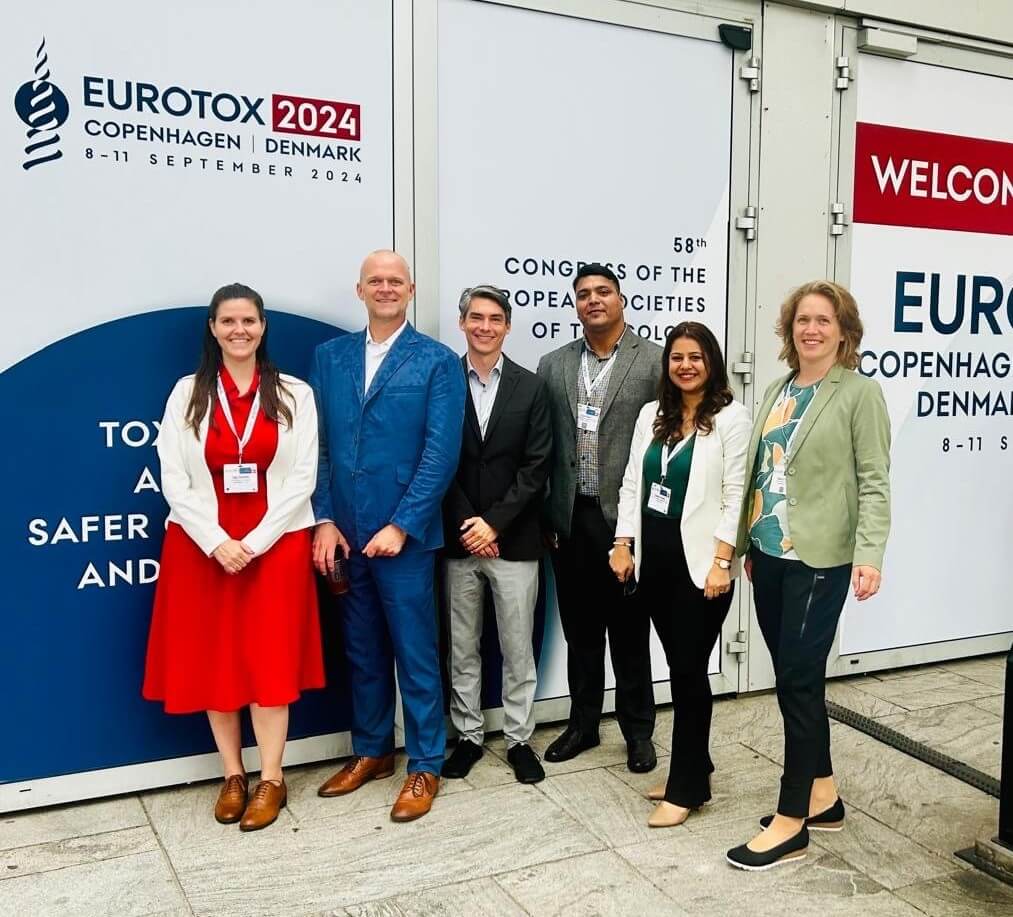
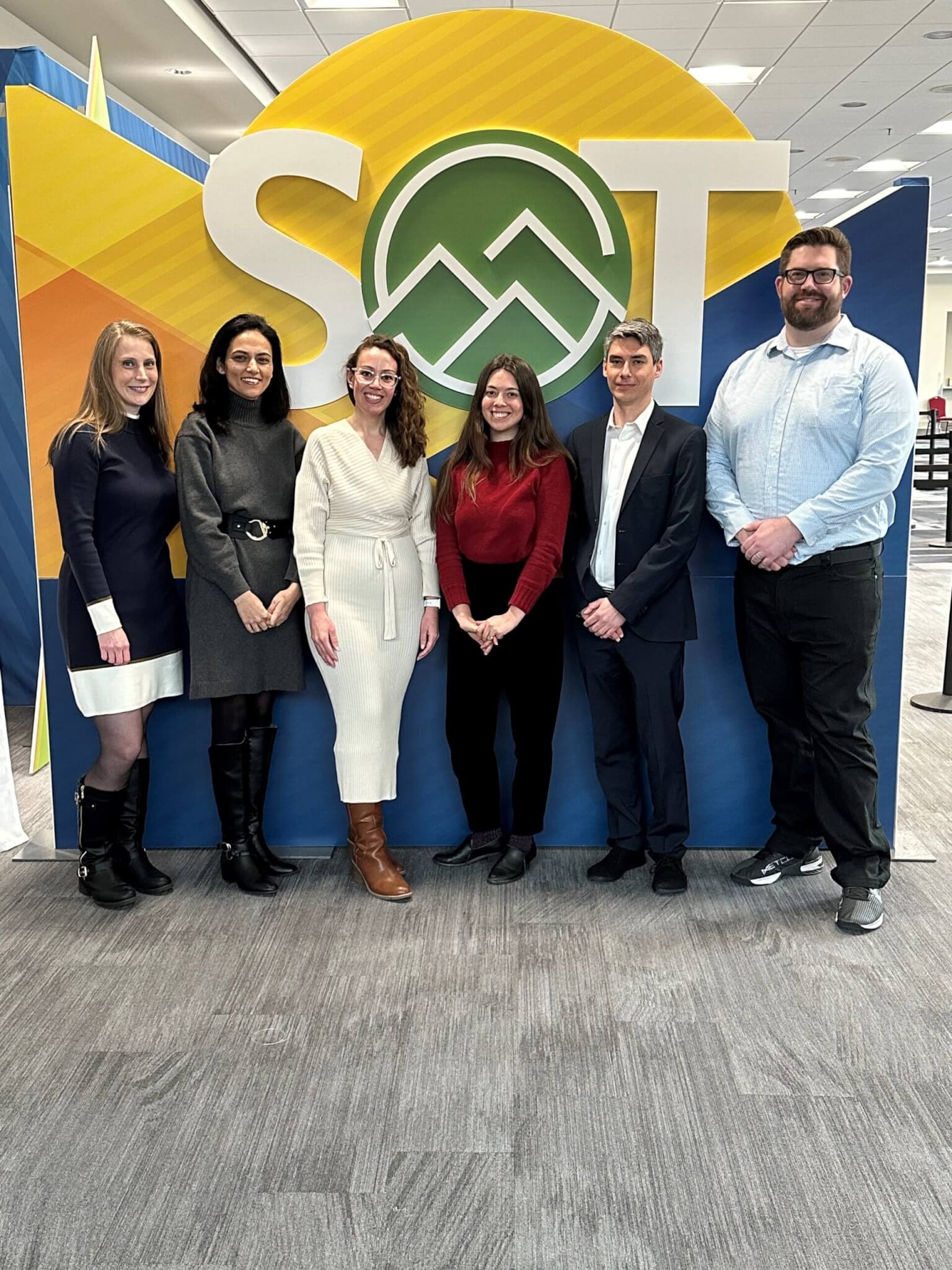
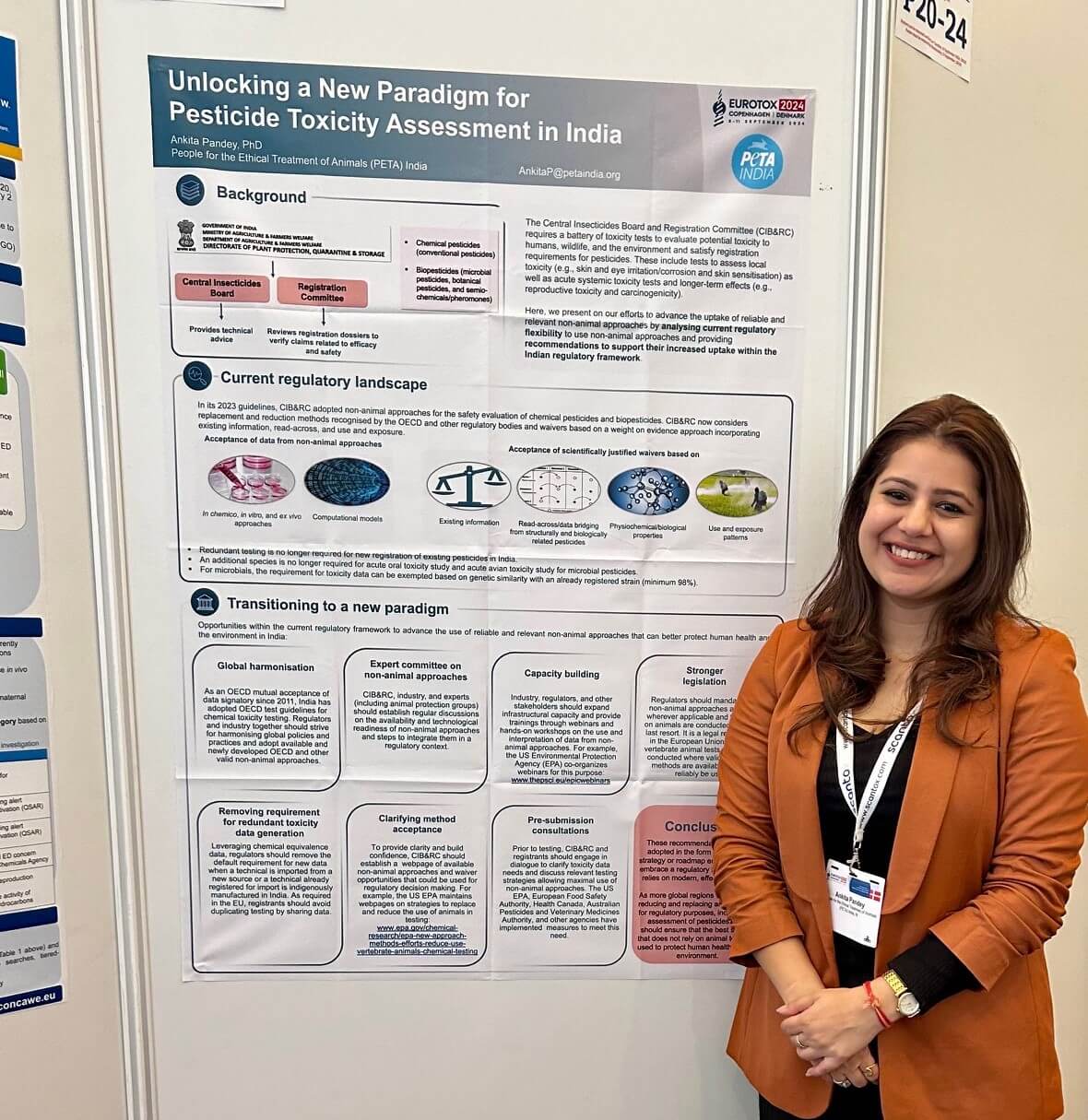
We chaired 11 sessions and delivered more than 40 oral and poster presentations at events such as the Society of Toxicology 63rd Annual Meeting and the 58th Congress of the European Societies of Toxicology, reaching thousands of scientists. Our topics covered non-animal pyrogen test methods, reducing the number of fish used in aquatic toxicity testing, and more. Our poster on a holistic approach to human-relevant in vitro inhalation toxicology testing came in second place for the Best Poster Award at the European Organ-on-Chip Society annual meeting, and our poster on defined approaches for predicting GHS and EPA eye irritation classification of agrochemicals received an Outstanding Poster Award at the American Society for Cellular and Computational Toxicology annual meeting.
These and other select presentations can be found here.
Awards and Grants
We awarded four researchers free tools to assess inhalation toxicity, including equipment to measure transepithelial/transendothelial electrical resistance (TEER) and three-dimensional reconstructed human respiratory tissues from Epithelix that can be used for testing cosmetics, pharmaceuticals, industrial chemicals, and other products.
We selected two early-career scientists as the winners of our award to attend the European Society of Toxicology In Vitro (ESTIV) Applied In Vitro Toxicology Training Course and sponsored twelve scientists to attend the ongoing In Vitro Toxicology Training Course at IIVS. One of the winners of our 2019 award to attend the IIVS workshop now heads the first laboratory in Argentina equipped to conduct non-animal tests that meet international standards. This year, she received a Science Consortium grant to help her implement non-animal skin sensitisation testing.
We presented an Early-Career Scientist Award to a researcher at the Luxembourg Institute of Science and Technology for her work replacing the use of animal-derived components in cell cultures and provided funding to a researcher at Technische Universität Berlin to equip him with the means to run a laboratory where students can learn cell culture techniques without animal-derived ingredients.
Our ongoing Recombinant Antibody Challenge continued providing researchers free catalogue recombinant antibodies to test in their in vitro applications of interest instead of using animal-derived antibodies.
Leadership Positions
This year, we were elected to and continued to serve in various leadership positions within scientific organisations. These include committees within the Society of Toxicology, the Health and Environmental Sciences Institute, the Federation of European Toxicologists and European Societies of Toxicology (EUROTOX), the European Society of Toxicology In Vitro, and the European Society for Alternatives to Animal Testing.

See our highlights from past years: