
 Tweet
Tweet Share
SharePETA Science Consortium International and Epithelix have awarded researchers reconstructed human respiratory tissues from Epithelix. The human cell–based tissue models mimic various regions of the respiratory tract and can be used for testing cosmetics, pharmaceuticals, medical device extracts, industrial chemicals, pesticides, and household products.
Congratulations to the winners!
2026

Dr Gerrit Bredeck of the Spanish National Research Council received a €20,000 award redeemable for human cell-based models by Epithelix, as well as free registration and travel assistance to attend the 2026 Lung In Vitro Event for Innovative & Predictive Models and the pre-congress Hands-On Training on In Vitro Lung Models.
“A major challenge in environmental health is understanding how inhaled pollutants affect not only the respiratory tract but also the cardiovascular system. This award will allow me to integrate physiologically relevant human respiratory tissues into my research and identify molecular signals linking air pollution to vascular dysfunction and ageing.” — Dr Gerrit Bredeck
2024
Dr Helena Kandarova of the Centre of Experimental Medicine at the Slovak Academy of Sciences received a US$15,000 (~€15,237) award redeemable for human cell-based models by Epithelix.
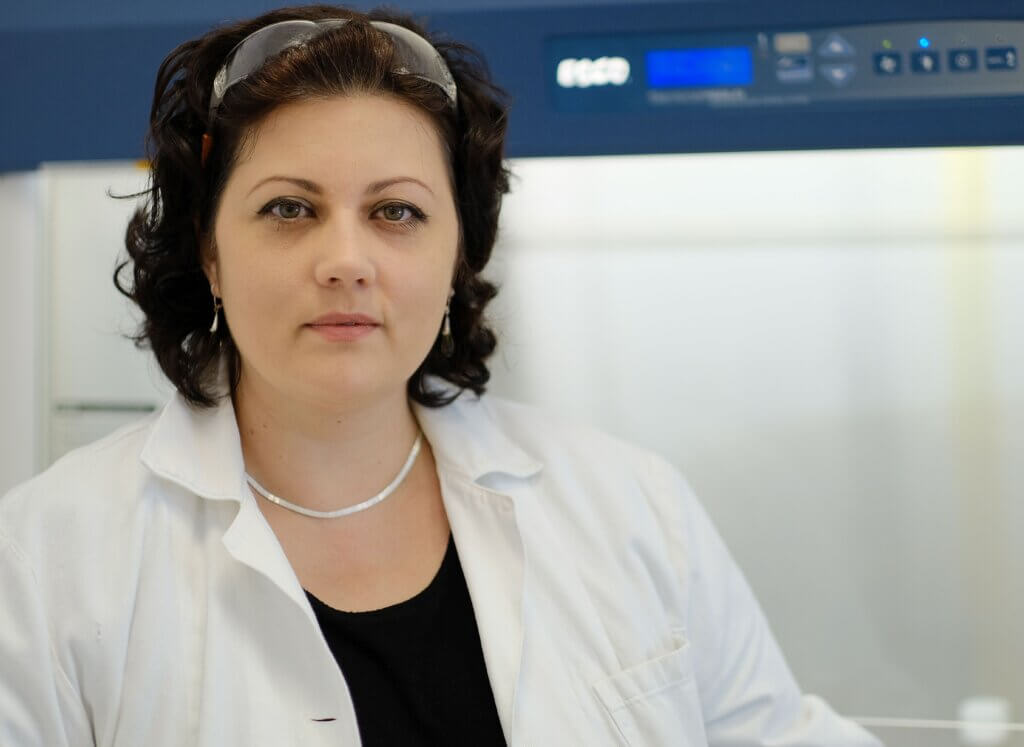
“My team and I at CEM are very thankful to PETA Science Consortium International for choosing us as the award recipients. The Epithelix models will help us explore interesting drug candidates for their antimicrobial and antiviral properties. We will use reconstructed airway (MucilAir and SmallAir) and alveolar tissue models, employing the VITROCELL® Cloud Alpha exposure system to investigate the molecules’ effects in vitro.”— Dr Helena Kandarova
2023
Dr Suzanne Cloonan of Trinity College Dublin received a US$15,000 (~€15,237) award redeemable for Epithelix tissues (MucilAir, SmallAir, or AlveolAir) and/or primary human alveolar macrophages. She will use the tissues to test the effects of cigarette smoke and bacterial infection in the context of lung diseases.

“There is an urgent need to develop in vitro models that physiologically, metabolically and immunologically mimic the alveolar space. This award will allow us to try and develop such a model to test new therapeutic interventions for infectious exacerbations in Chronic Obstructive Pulmonary disease.”— Dr Suzanne Cloonan
2018
First Place (US$5,000 award)
Kristine Nishida, from the Division of Pulmonary and Critical Care Medicine at Johns Hopkins School of Medicine, will expose the 3-D tissues to cigarette smoke to elucidate the mechanism underlying the progression of chronic obstructive pulmonary disease (COPD). She will also study tissues from human donors with COPD to gain a deeper understanding of the disease pathogenesis and how to reverse the effects.

“I am so honored to receive this wonderful award! The MucilAir cells will allow us to elucidate the mechanisms that occur in human cells isolated from several different COPD and non-diseased donors in a fully differentiated air-liquid interface culture. We will be able to expose the tissues at air-liquid interface to whole cigarette smoke and fully detail the changes that occur in the epithelium that we couldn’t otherwise do in an animal model.”— Kristine Nishida
Second Place (US$2,500 award each)
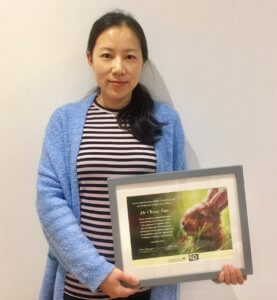
Dr Chang Guo, Public Health England, will use the tissues for toxicity testing of carbon nanotubes.
Dr Richard Gminski, University of Freiburg, will use the tissues to evaluate the efficacy of drugs on Klebsiella pneumoniae, an antibiotic-resistant bacterium that poses a health threat to hospital patients worldwide.